The Cost of Garage Doors and the Factors That Influence the Prices
Asking for the average cost of a garage door is like asking for the average cost of a car. A quote is really six decisions stacked on top of each other, and two of them, spring cycle life and insulation type, are the ones homeowners never ask about and always pay for later.
Published Updated 10 min read
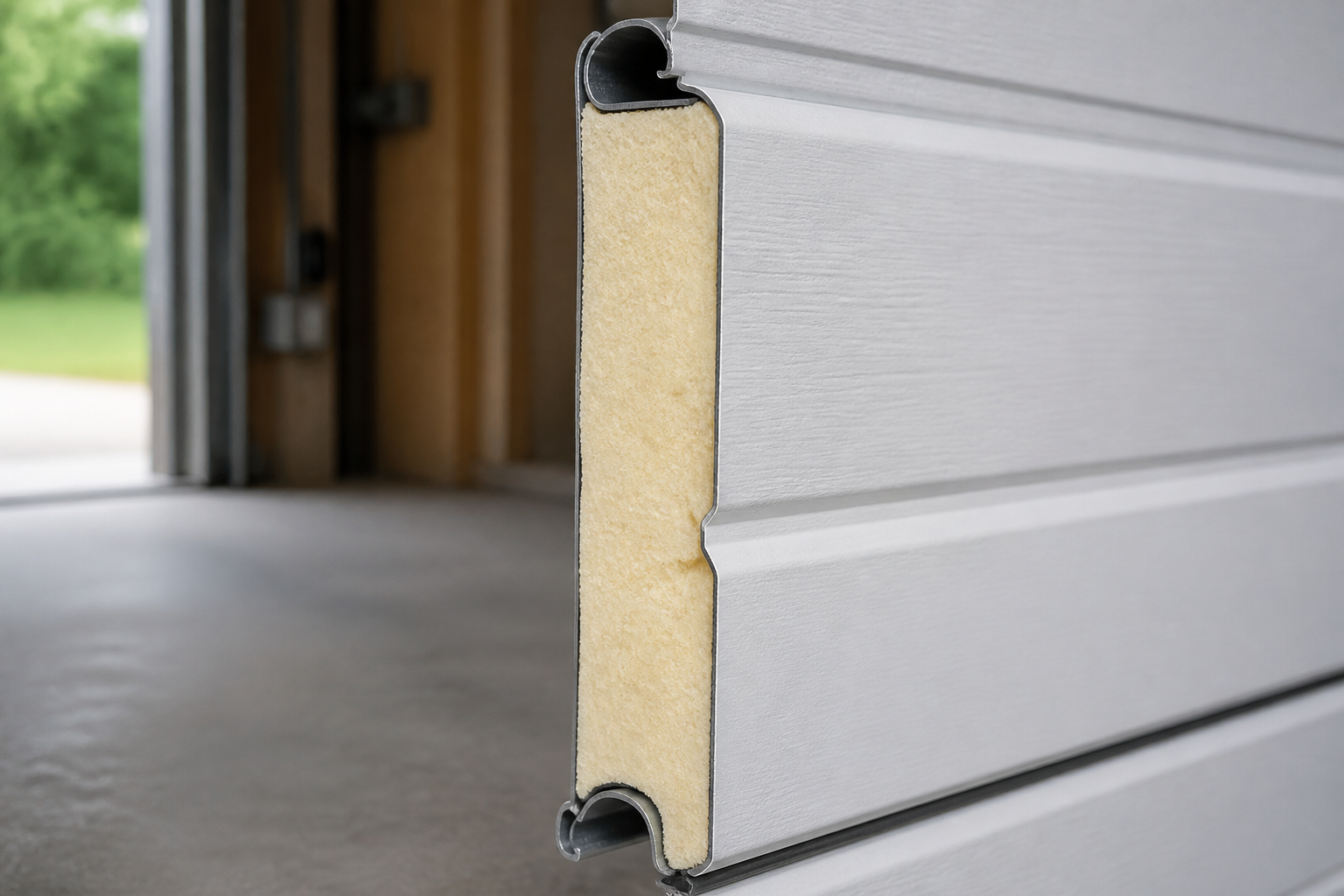
A garage door is usually the largest moving object in a house and often the largest single opening in its envelope. Two doors that look identical from the street can differ by a factor of several in cost, and the differences are all in places you cannot see from the driveway: the thickness of the steel, what is inside the section, and how many times the springs are rated to lift it.
Why average cost is a weak question
This site does not publish prices, and in this case that is a feature. Any national average you find blends single and double doors, uninsulated and triple-layer sections, a builder-grade opener and a jackshaft unit, and installation markets that have nothing in common. Applying that number to your driveway tells you nothing useful.
What does transfer between markets is the structure of the quote. If you can read the six decisions below, you can compare two proposals properly, and you can tell when a low number is a different product rather than a better deal.
Size and opening
Residential doors cluster around a few standard sizes. Single car doors are commonly 8 or 9 feet wide, double car doors commonly 16 feet, with 7 feet the usual height and 8 feet a frequent upgrade. Standard sizes are stocked; anything else is made to order, and made to order is where the price steps rather than slopes.
Two doors or one is a real decision as well. A pair of single doors costs more in hardware, openers and installation than one double, and gives you a centre post you may or may not want.
Material, and what steel gauge means
- Steel
- The default. Measured in gauge, and the counter-intuitive part is that a lower gauge number is thicker steel: 24 gauge is heavier than 27 gauge. Thicker skins dent less and hold their shape better, and gauge is one of the most reliable quality signals on a specification sheet.
- Aluminium and glass
- Light, corrosion resistant, popular in contemporary designs and in coastal air. Dents more easily than steel of equivalent cost.
- Wood
- The most expensive to buy and the only one with a real maintenance schedule. Heavy, which affects spring sizing and opener choice.
- Composite and fibreglass
- Wood appearance without the refinishing. Performance depends heavily on the specific product, so read the warranty rather than the brochure.
Insulation, R-value and the two foam types
Insulated doors are described by an R-value, and the number depends on both the material and how the section is built.
- Single layer. One steel skin, no insulation. Lightest and cheapest, loudest in operation, least rigid.
- Two layer. A skin with insulation attached, usually expanded polystyrene board slipped into the section.
- Three layer. Two steel skins with a core between them. This is the stiff, quiet construction, and stiffness matters as much as the R-value on a wide door.
- Polystyrene versus polyurethane. Polystyrene is a board dropped into the section. Polyurethane is injected and expands to bond to both skins, giving a higher R-value per inch and stiffening the whole section as it cures.
Insulation matters more than people assume even on a detached garage, because it is also what makes a door quiet and what keeps a wide section from flexing. If a room sits above or beside the garage, it stops being optional.
Track, windows and hardware
The track configuration is set by the garage, not by taste. Standard lift is the default; low headroom track exists for garages with little space above the opening; high lift and vertical lift raise the door higher before it turns, which is what you need for a car lift or a tall vehicle. Track type changes the hardware package and sometimes the opener.
Windows add cost per section and can add glazing requirements. Insulated glass, obscure glazing and impact-rated glazing are three different products. Hardware upgrades that are worth asking about include heavier duty rollers with sealed bearings, which are quieter and last longer, and a proper bottom seal with a retainer.
Springs and cycle life
The springs, not the opener, carry the weight of the door. There are two systems.
- Torsion springs
- Mounted on a shaft above the opening. They control the door through its whole travel, balance better, and are the standard on all but the lightest doors.
- Extension springs
- Stretched along the horizontal tracks. Cheaper, and they require containment cables so a broken spring cannot become a projectile.
The specification that belongs in your quote is cycle life. Springs are rated by the number of open and close cycles they are designed for, with 10,000 cycles a common baseline and higher-cycle springs widely available. One cycle is one opening and one closing. A household that comes and goes four times a day burns through cycles far faster than the person who wrote the baseline imagined, and upgrading the spring at the time of installation costs a fraction of replacing it later.
Never attempt to adjust or replace a torsion spring yourself. It stores enough energy to break bones, and it does so instantly.
The one absolute rule on this page
The opener is a separate purchase
The opener does not lift the door, it moves a balanced door. Chain drive is cheapest and noisiest, belt drive is quieter, and a wall-mounted jackshaft opener clears the ceiling entirely, which matters when you want storage or a car lift.
One safety point is not optional and has not been for decades: since the start of 1993, residential garage door openers sold in the United States have been required to include an external entrapment protection system, in practice the pair of photoelectric sensors mounted near the floor on each side of the opening. If a quote includes reusing an older opener without them, that is a reason to stop and ask questions.
Wind load, codes and coastal requirements
A garage door is a large, thin panel in a wall, which makes it one of the most vulnerable parts of a house in high wind. Once it fails, the building is pressurised from inside and the roof is at risk. That is why wind load rated doors, with reinforced sections and heavier track and jamb fixings, are a code requirement in high-wind and wind-borne debris regions rather than an upgrade.
Ask which standard the door is tested to and whether the rating applies to the door alone or to the door as installed with its specified jamb hardware. The two are not the same, and the installation detail is what gets skipped.
Labour, removal and the small lines
| Line | Pushes the price up | Pulls it down |
|---|---|---|
| Size | Non-standard width or height, custom colour | A stocked standard size |
| Construction | Three layer, bonded polyurethane core | Single layer, no insulation |
| Steel | Lower gauge number, heavier skin | Higher gauge number, thinner skin |
| Glazing | Insulated or impact-rated windows | No windows |
| Track | Low headroom, high lift, vertical lift | Standard lift in a conventional garage |
| Springs | Higher cycle rating | Baseline cycle rating, paid again later |
| Site work | Rotten jambs, out of square opening, structural header repair | Sound opening, straightforward access |
| Extras | Removal and disposal of the old door, permit, wind load package | Existing opener kept, if it is compliant and sound |
Questions to ask before signing
- What is the section construction, and is the core polystyrene or bonded polyurethane?
- What steel gauge are the skins?
- What is the spring type and its cycle rating, and what does upgrading it cost now?
- Is the opener new, and does it have working photo-eye sensors?
- Does the quote include removal and disposal of the old door?
- Is a wind load rating required here, and does the quote include the specified jamb fixing?
- What exactly does the warranty cover: sections, finish, hardware, springs, labour? Those are usually four different periods.
A garage door is part of the building envelope, alongside the roof and the windows, and it fails in the same weather. If you are budgeting several envelope items at once, the guide to when a roof is finished and the order-of-works guide are the two to read next.