The Benefits of Installing Carpet, Other Than Its Beautiful Looks
Carpet is almost always chosen by appearance. Its genuine advantages are measurable ones: it absorbs airborne sound, it cuts impact noise between floors, it reduces fall injury, it adds thermal resistance, and it is the cheapest way to change how a room feels underfoot.
Published 9 min read
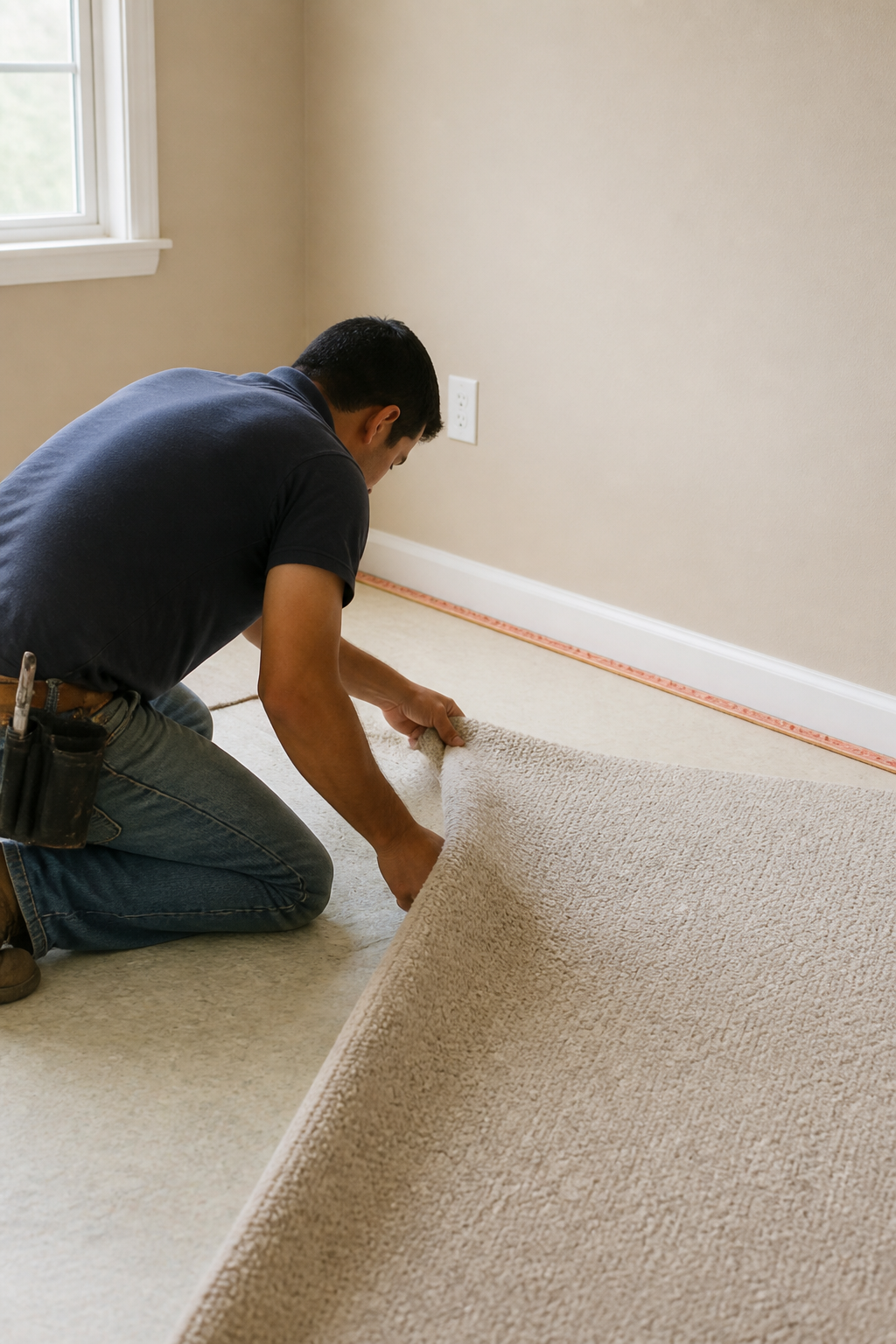
Every hard floor has one thing in common: it reflects sound and it transmits impact. Carpet is the only common floor covering that does neither, which is why it survives every design cycle that declares it finished, and why it keeps coming back in bedrooms, stairs and any room above another room.
Sound, the strongest argument
There are two different acoustic problems in a house and carpet is unusual in helping with both.
- Airborne sound
- Voices, television, music. Hard surfaces reflect it, which lengthens reverberation and makes rooms feel loud and speech harder to follow. A porous surface absorbs it. Carpet and cushion are rated for absorption, and adding them is the least disruptive acoustic change available in a finished room.
- Impact sound
- Footsteps, dropped objects, chair legs, transmitted through the structure to the room below. This is the one that causes arguments in apartments and in wood-framed houses. Carpet over a cushion is the single most effective and cheapest impact treatment for an existing floor, which is why so many condominium rules specify it or specify an equivalent rating.
Underfoot safety
Carpet contributes in two distinct ways. It provides more traction than a smooth hard surface, particularly for socks and bare feet, and it absorbs some of the energy of a fall. Neither makes a floor safe on its own, and stairs remain the highest risk area in any house, but for a household with young children or older adults it is a real consideration rather than a marketing line. On stairs, the fit matters more than the product: a loose or poorly stretched carpet is worse than a bare tread.
Thermal comfort
Carpet and cushion have a measurable thermal resistance, and they change perceived comfort more than the number suggests, because bare feet lose heat to a hard floor by conduction. Two rooms at the same air temperature feel different underfoot, which is why carpeted bedrooms are so persistent in cold climates. It also means a carpeted room can often be comfortable at a slightly lower thermostat setting, which is a small but genuine saving.
One caveat worth stating plainly: over a heated floor, carpet and cushion work against the system, and the manufacturer of the heating will specify a maximum resistance for whatever goes on top. That number is a limit, not a suggestion.
Indoor air, honestly
Carpet is often defended on the grounds that it traps particles instead of letting them circulate, and attacked on the grounds that it holds allergens. Both statements describe the same physical behaviour, and the outcome depends entirely on cleaning.
- A carpet vacuumed properly and regularly holds particles until they are removed.
- A carpet vacuumed rarely becomes a reservoir that gets disturbed by every footstep.
- Walk-off mats at entrances remove a large share of what would otherwise be ground into the fibre.
- For new material, look for the Carpet and Rug Institute Green Label Plus certification, which is the American programme for low volatile organic compound emissions and covers carpet, cushion and adhesive as separate certifications. All three matter, because the adhesive is frequently the strongest emitter.
- Ventilate during and after installation, and be aware that new-material odour is not the same thing as a hazard, but the ventilation is free.
What actually decides durability
Not the colour and not the price. Four specifications do most of the work.
| Specification | What it describes | Why it matters |
|---|---|---|
| Fibre | Nylon 6 and nylon 6,6, PET polyester, triexta, olefin, wool | Nylon is the most resilient of the common synthetics; polyester and triexta resist staining well; olefin is cheap and fade resistant but crushes; wool is resilient, expensive and needs its own care |
| Twist | How tightly the yarn is twisted and heat set | Untwisting is what makes a cut pile look worn in traffic lanes long before it is thin |
| Density | How closely the tufts are packed | Denser pile supports itself, so the backing is protected and footprints recover |
| Pile type | Cut, loop, or cut and loop | Loop wears well and shows less traffic; cut pile is softer; loops can snag with pets |
Face weight, the ounces of fibre per square yard, is the number most often quoted in showrooms. It only means something when density and twist are held constant, so treat it as one input rather than the answer.
The cushion rule
The cushion is not an accessory. It absorbs impact, it carries much of the acoustic performance, and it determines how long the carpet backing survives. It also has a limit that surprises people: thicker is not better. Carpet and Rug Institute installation guidance, and most residential carpet warranties, cap cushion thickness for cut pile carpet at seven sixteenths of an inch. Beyond that the carpet flexes too much at the backing, seams work loose and the warranty is void.
Buying a thicker cushion than the warranty allows is the most common way to shorten the life of a new carpet on day one.
Read the carpet warranty before choosing the cushion
Where carpet is the wrong answer
- Entryways. Grit does the damage, and an entry is where grit arrives.
- Bathrooms and laundry rooms. Repeated wetting, and a cushion that will not dry.
- Below-grade slabs with a moisture problem. Solve the moisture first or the carpet becomes the symptom.
- Under a rolling desk chair. Casters chew a traffic circle into pile faster than anything else in a house. That specific problem is dealt with in the guide to flooring for a home office.
The maintenance that decides its life
- Vacuum the traffic lanes far more often than the rest of the room. Wear is grit being walked into the pile, not fibre wearing out.
- Use walk-off mats at every exterior door and keep them clean, or they become the grit supply.
- Blot spills, never rub, and work from the outside inward.
- Have the carpet hot water extracted periodically. Most manufacturer warranties require it at a stated interval and require you to keep the receipts.
- Move furniture slightly from time to time so crush marks do not become permanent.
Done properly, that list is why two identical carpets installed in the same building can be five years apart in appearance.